Fashion Production & Apparel Supply Chain Insights
Actionable insights on fashion production workflows, design-to-delivery optimization, supplier coordination, inventory management, order fulfillment, and industry trends for apparel businesses.
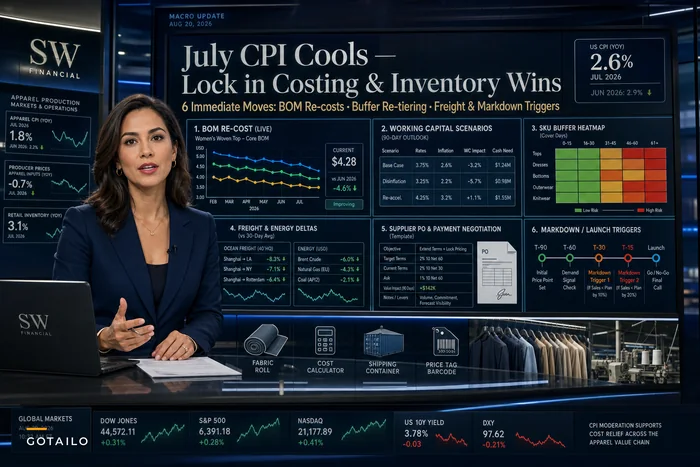
Translate the July 2026 CPI print into six concrete operational actions: rapid BOM re-costs, scenario-based working-capital models tied to rate and inflation paths, prioritized buffer inventory for high-risk SKUs, supplier payment/PO renegotiation templates, freight and energy cost watchlists, and updated markdown/launch triggers. Each action maps to required inputs and short templates production teams can run this week.
Juan CabreraFounder of SoftWorks Global & Business Systems Researcher
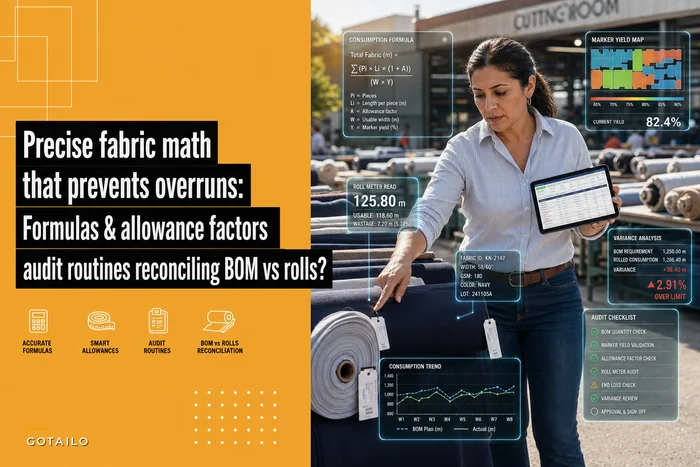
Concrete formulas that account for shrinkage, defects and marker yield, plus audit routines comparing BOM vs roll usage with sample spreadsheets and example calculations by garment type.
Juan CabreraFounder of SoftWorks Global & Business Systems Researcher
A tactical playbook with time-boxed sample cycles, acceptance criteria per sample tier, parallel task templates and remote evidence standards plus a sample-cycle calendar to shave weeks off seasonal timelines.
Juan CabreraFounder of SoftWorks Global & Business Systems Researcher
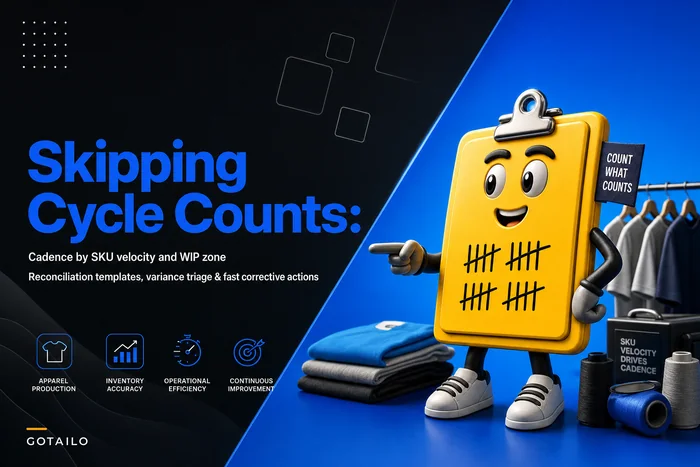
Pragmatic cadence by SKU velocity and WIP zone, reconciliation templates, variance triage steps and fast corrective actions for small factories — minute-by-minute routines and sample forms.
Juan CabreraFounder of SoftWorks Global & Business Systems Researcher
Operational guide to designing supplier networks for apparel: SKU-by-factory capacity profiling, lead-time correlation maps, tactical failover playbooks and contract guardrails with worked rebalancing examples and templates.
Juan CabreraFounder of SoftWorks Global & Business Systems Researcher
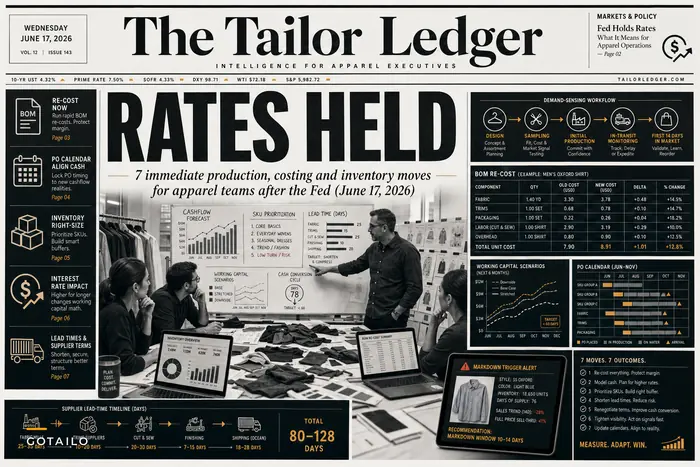
Actionable checklist translating the Fed's June 17, 2026 rate decision into immediate apparel operations moves: run rapid BOM re-costs, model working-capital scenarios, reprioritize SKUs for buffer inventory, shorten supplier lead-time commitments, renegotiate payment/PO terms, tighten inventory visibility and markdown triggers, and update production calendars and cashflow forecasts. Each step maps to the operational inputs required (BOM, PO timing, lead times, inventory thresholds) and includes KPIs and short templates to implement quickly.
Juan CabreraFounder of SoftWorks Global & Business Systems Researcher